
Writing more human emails begins with the obvious, don’t leave it to AI. Something special happens when a real person sits down at a computer to write.
The sentences may not be perfect. Perhaps you even miss a typo every once in a while. But in these days of AI writing, those typos and imperfect sentences can be a mark of your humanity.
Of course, that doesn’t mean you should write some nonsense and send it out with careless mistakes everywhere. You should certainly still edit your work
Always ensure the right message is coming across in your emails. That doesn’t mean you should be dry or boring. Here are five tips to make your emails more human.
Tip 1: It’s in your voice and tone
Use your speaking voice
Per title guidelines, the subtitles above should be capitalized. In fact, if this was a school paper, the title would be, “Tip 1: Voice and Tone.”
Thankfully, this is not a school paper and this is not a 5-paragraph essay. I want to write subtitles, and the content within those sections, as if it’s a conversation with you.

Write with the same rhythm and style you tend to speak. Use contractions and the same words you’d use when speaking.
It’s not about you
Your emails should have more “yous” than “I’s.” You don’t care what I’m doing, only how that benefits you. You are the most important person in any piece I write, and the same should be true in your emails.
Buzz buzz buzz
Since the goal of your emails should be to speak to your reader, ditch the fancy talk and industry jargon. Using buzzwords is superficial, insider talk confuses your readers, and convoluted tough words just make you look foolish or arrogant. In all cases, they drive people away.
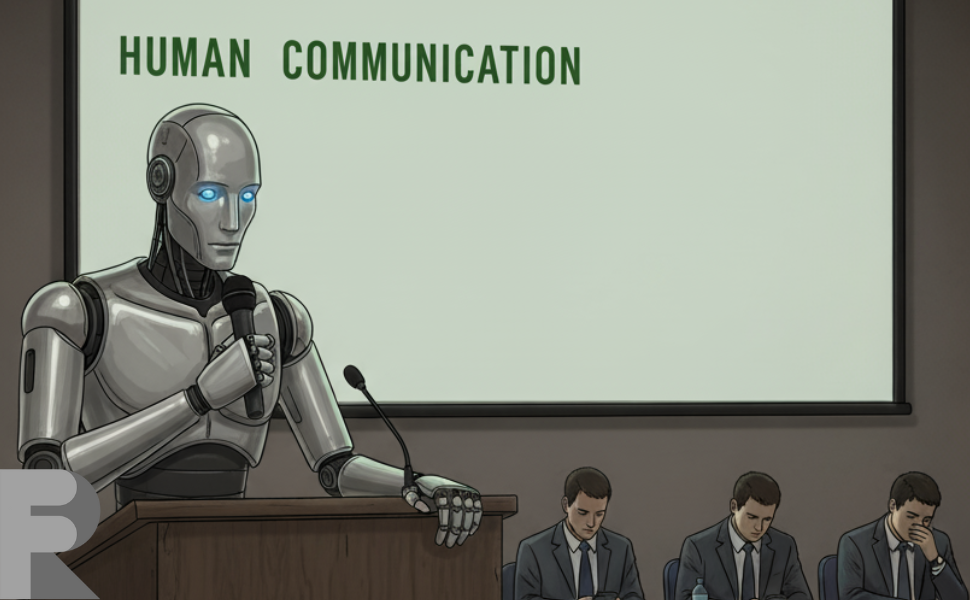
Robots are cold
You’re not a robot so warm things up a bit. “Dear valued customer” is not the greeting you want to use. Use their name and if you don’t know it, “hey there” sounds closer to something you’d say if you ran into someone you wanted to speak to on a show floor.
And finally, don’t be afraid of a little humor. Sure, you don’t want to turn the whole email into a big joke but think about your normal conversations. How often do they include an inside joke or funny observation to keep things light.
Tip 2: People love stories
While thinking about keeping things light, why not start that way? Rather than diving right into a pitch, ease into it with a relevant story.
Maybe your dog took off on you while you were cleaning up after them. You spent the rest of your morning chasing them around your neighborhood. As a result, you’re writing the email to your client still sweating from your ordeal. Let them know about it. They’ll get a chuckle and stay with you through the rest.
Search engine optimization gurus hate this advice. They prefer you jump right into the keyword in that first paragraph, almost like you’d write a press release or newspaper article.

First off, we’re talking email, not blogs. Second, even if you take this approach on a blog, it’s more likely to keep people reading than ensuring you start with your keyword. Write for humans first and then optimize for search engines and AI, not the other way around.
Tip 3: Think about your subject lines
Many people think hard about the email body. They may even proofread it before they call it done. Then they drop in any subject line and hit send. Let’s rethink that a bit.
A good subject line should read like something you’d say to a friend if you were starting a conversation on a specific topic. If you were sending your best friend an email asking them to join you at a bar in two weeks, you might use the subject line, “It’s been a while, let’s get a beer.”
Your readers will open your message exclusively based on your subject line. If it’s boring or vague, your email’s getting tossed. Keep the subject brief and conversational.

Tip 4: Relationships need sharing, so share
If you’re developing a relationship with someone, you have to share some of yourself. And the deeper the relationship, the more vulnerable you make yourself. Well, the same is true in business relationships.
Say you tried out a product feature and it didn’t quite work out as you thought. You could toss it into the big bin of failed experiments and never speak of it again, OR you can take the experience and share it with your customers in a video or blog post.
Let your audience know what you were hoping to accomplish, how it fell short, and when you knew it was time to leave it behind. You’ve now built a little more trust with your customer by sharing something you originally wanted to put behind you.
Another way to share a bit of yourself is to simply show you’re human. Do you take your dogs to the office? Record and share their antics every once in a while. Did your company just have their annual team trip? Share some pictures of your staff having fun.
Remember people buy from people, not companies. Show the people behind yours.

Tip 5: One-size-fits-all is inauthentic
When you have a small email list, it’s easy to maintain. All the people on the list could have similar interests. They may all be potential customers and even come from the same source, like a trade show or networking event.
But as your list grows, the audience is more diverse. Some may have come from an electronics trade show while others may have been from a regional small business show. Others may have found your website researching your type of products, and still others may have come to you with a strong intention to buy but are still researching options.
Segmenting is how you separate your email list, or any section of your audience, into small groups so that you can send them more targeted messages. Set up an automation for this when your list is small so you can manage it easily.
Once segmented, you can send promotions to people with high purchase intent, case studies to people doing research, general brand introductions to another segment, etc. Do this right and each recipient will feel like you’re writing to them alone.
Bonus: Stop doing this
Formal doesn’t work
Stop writing like you’re writing a press release. Formal tone gets tedious to read, most people hate a hard sell, and nobody starts an in-person conversation with the words, “we’re proud to introduce.”
Messages are better coming from a real person
Don’t use an email like “marketingemails@company.com.” You should also change the name so people see it comes from a person and not just your company name.
Easy with the dynamic content
Dynamic content is cool but too much of it is creepy and intrusive. Personalized messaging comes from a combination of calculated dynamic content and segmentation.
STOP THE ALL CAPS
Writing in all caps and using excessive exclamation marks is, well, excessive. You’re not shouting and that’s what all-caps feels like. Expressing excitement is the job of the exclamation point. You don’t need more than one.
Stop polishing so much
Each polishing pass that strives for perfection is removing your personality. As for typos, nothing is more human than mitsakes ( 😊). It’s okay to leave in one or two sometimes, especially in this era of AI.
Last words about more human email
Whether you’re going to write email for yourself or use AI to help you craft it, it’s your responsibility to ensure the messaging is human. Your goal is to get people to read your message and ultimately act. Don’t leave it up to a machine without at least reviewing it and adding in your personality.
If you’re looking for an email strategy that drives more action and someone to write messages people read, we’re here to help you. We’ll get to know you and see if we’re the right fit for your email and other content marketing needs. Contact us today to get started.